LiFePO4 and lead acid batteries are two of the most common rechargeable battery types used in solar storage, RVs, marine systems, backup power, and industrial equipment.
LiFePO4 batteries offer longer lifespan, faster charging, lighter weight, and higher efficiency. Lead acid batteries remain popular because of their lower upfront cost and wide availability.
This guide compares LiFePO4 vs lead acid batteries in terms of charging efficiency, cycle life, safety, maintenance, cost, and real-world applications to help you choose the right battery system.
Key Takeaways
- LiFePO4 batteries last significantly longer than lead acid batteries, often exceeding 2,000–6,000 cycles.
- LiFePO4 charging efficiency is much higher, usually around 95–98%, while lead acid batteries average 70–85%.
- Lead acid batteries are cheaper upfront but usually cost more over time due to shorter lifespan and maintenance.
- LiFePO4 batteries are lighter, safer, and require almost no maintenance.
- Lead acid batteries still work well for low-cost backup power and high surge current applications.
- For solar energy storage, RVs, marine systems, and frequent cycling applications, LiFePO4 is usually the better long-term investment.
Part 1. What is a lifepo4 battery?
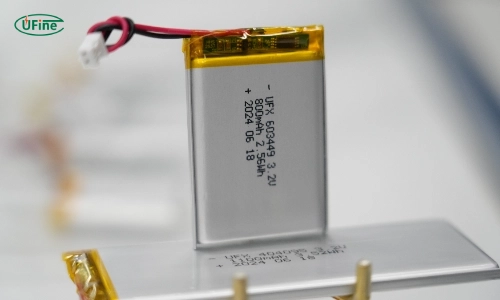
A LiFePO4 battery, also called a lithium iron phosphate battery, is a type of lithium-ion battery that uses lithium iron phosphate as the cathode material. It is known for excellent thermal stability, long cycle life, and high safety performance.
Compared with other lithium chemistries, LiFePO4 batteries offer a strong balance between safety, lifespan, charging speed, and energy efficiency.
Common applications include:
- Solar energy storage systems
- RV and camper batteries
- Marine batteries
- Electric vehicles
- Portable power stations
- Industrial equipment
- Telecom backup systems
For more lithium battery basics, see our guide on what a lithium-ion battery is.
Part 2. What is a lead acid battery?
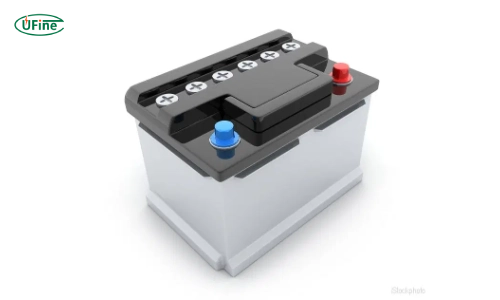
Lead acid batteries are one of the oldest rechargeable battery technologies. They use lead plates and sulfuric acid electrolyte to store and release electrical energy.
Despite being over 100 years old, lead acid batteries are still widely used because they are affordable and reliable for many standby and automotive applications.
The two main types are:
- Flooded lead acid batteries
- Sealed lead acid batteries (AGM and Gel)
Typical applications include:
- Automotive starter batteries
- UPS backup systems
- Emergency lighting
- Telecom backup
- Golf carts
- Low-cost solar systems
The U.S. Department of Energy explains battery storage technologies and performance differences in detail: U.S. Department of Energy Battery Resources
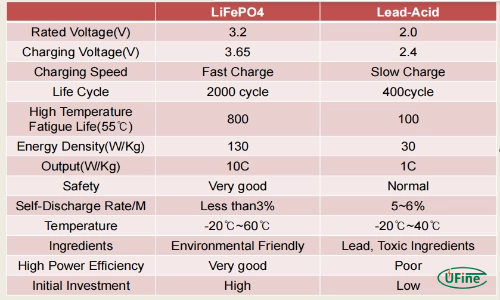
Part 3. Lifepo4 vs lead acid battery comparison
1. Energy Density
Energy density measures how much energy a battery can store relative to its weight and size.
LiFePO4 Batteries: LiFePO4 batteries have much higher energy density than lead acid batteries. They deliver more usable power while occupying less space.
Advantages include:
- Smaller battery banks
- Lower overall system weight
- Easier installation
- Better portability
Lead Acid Batteries: Lead acid batteries are larger and heavier for the same energy capacity. In mobile applications, this extra weight can reduce efficiency and increase transport costs.
Example: A 100Ah LiFePO4 battery can weigh around 25 lbs, while a comparable lead acid battery may weigh 60–70 lbs.
2. Cycle Life and Lifespan
Cycle life is one of the biggest differences between LiFePO4 and lead acid batteries.
| Battery Type | Typical Cycle Life |
|---|---|
| LiFePO4 | 2,000–6,000+ cycles |
| Lead Acid | 300–500 cycles |
LiFePO4 Batteries: LiFePO4 batteries are designed for deep cycling and repeated charging. They maintain stable capacity over many years. In solar and off-grid systems, this longer lifespan greatly reduces replacement frequency.
Lead Acid Batteries: Lead acid batteries degrade faster, especially when deep discharged, left partially charged, or exposed to high temperatures. Frequent cycling can shorten lifespan dramatically.
3. LiFePO4 vs Lead Acid Charging Efficiency
Charging efficiency is a major factor in renewable energy systems and backup applications.
LiFePO4 Charging: LiFePO4 batteries typically achieve 95–98% charging efficiency. They can also accept higher charging currents, which reduces charging time.
Benefits include:
- Faster charging
- Less energy loss
- Better solar charging performance
- Improved generator efficiency
Lead Acid Charging: Lead acid batteries generally achieve 70–85% charging efficiency. As the battery approaches full charge, charging speed slows significantly. This wastes energy and increases charging time.
Why This Matters: In solar systems, poor charging efficiency means more solar panels may be required to compensate for energy loss. For users searching for LiFePO4 vs lead acid charging, LiFePO4 batteries are usually the better choice for fast charging and high-efficiency energy storage.
For additional charging guidance, see our article on how to charge a LiFePO4 battery safely.
4. Depth of Discharge (DoD)
Depth of discharge determines how much battery capacity can be safely used.
| Battery Type | Recommended DoD |
|---|---|
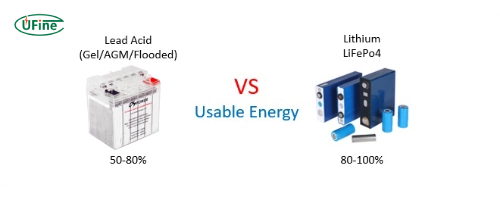
| LiFePO4 | 80–100% |
| Lead Acid | 50% |
LiFePO4 Batteries: LiFePO4 batteries can safely use most of their rated capacity without major damage. A 100Ah LiFePO4 battery often delivers nearly the full 100Ah usable capacity.
Lead Acid Batteries: Lead acid batteries should usually not discharge below 50%. This means a 100Ah lead acid battery may only provide about 50Ah of practical usable energy.
5. Safety and Thermal Stability
Battery safety is critical in energy storage systems.
LiFePO4 Batteries: LiFePO4 chemistry is one of the safest lithium battery technologies available.
Advantages include:
- Excellent thermal stability
- Lower risk of thermal runaway
- Better resistance to overheating
- No acid leakage
Most modern LiFePO4 batteries also include a Battery Management System (BMS) for protection against overcharging, overdischarging, short circuits, overcurrent, and high temperature.
Lead Acid Batteries: Lead acid batteries can release hydrogen gas during charging. Poor ventilation may increase explosion risk. Flooded lead acid batteries also contain corrosive sulfuric acid that can leak if damaged.
6. Maintenance Requirements
LiFePO4 Batteries: LiFePO4 batteries are nearly maintenance-free. Users do not need to add water, clean corrosion frequently, or equalize charges regularly.
Lead Acid Batteries: Flooded lead acid batteries require ongoing maintenance, including checking electrolyte levels, cleaning terminals, preventing sulfation, and maintaining proper ventilation. AGM batteries reduce maintenance but still have shorter lifespan limitations.
7. Environmental Impact
LiFePO4 Batteries: LiFePO4 batteries do not contain lead or cadmium. Their long lifespan also reduces battery waste over time.
Lead Acid Batteries: Lead acid batteries contain toxic heavy metals and sulfuric acid. Improper disposal can damage the environment. However, lead acid recycling infrastructure is mature and widely available.
The U.S. Environmental Protection Agency provides battery recycling guidance here: EPA Battery Recycling Information
8. Cost Analysis: Upfront Cost vs Lifetime Cost
Lead Acid Batteries: Lead acid batteries have lower initial purchase prices. This makes them attractive for tight budgets, short-term projects, and backup systems with infrequent cycling.
LiFePO4 Batteries: LiFePO4 batteries cost more upfront but usually provide lower total ownership cost over time.
Reasons include:
- Longer lifespan
- Higher usable capacity
- Lower maintenance
- Better efficiency
- Fewer replacements
Real-World Example: A lead acid battery bank may require replacement 3–5 times during the lifespan of a single LiFePO4 system.
9. Best Applications for Each Battery Type
| Application | Better Choice |
|---|---|
| Solar energy storage | LiFePO4 |
| RV batteries | LiFePO4 |
| Marine batteries | LiFePO4 |
| Off-grid systems | LiFePO4 |
| Electric vehicles | LiFePO4 |
| UPS backup | Lead Acid or LiFePO4 |
| Automotive starter battery | Lead Acid |
| Budget backup power | Lead Acid |
10. Can You Replace Lead Acid With LiFePO4?
Yes, many users upgrade from lead acid to LiFePO4 batteries.
However, several factors must be checked first:
- Charging voltage compatibility
- Charger type
- Battery management system (BMS)
- Space and mounting
- Temperature conditions
LiFePO4 batteries often work as drop-in replacements, but older charging systems may require adjustment.
For custom replacement solutions, see custom lithium battery packs.
Part 4. Lifepo4 vs lead acid: which battery should you choose?
Choose LiFePO4 batteries if you need:
- Long lifespan
- Lightweight design
- Fast charging
- Deep cycle performance
- Low maintenance
- High efficiency
- Better solar storage performance
Choose lead acid batteries if you need:
- Low upfront cost
- Simple backup power
- High surge current
- Infrequent cycling
For most modern energy storage applications, LiFePO4 batteries deliver better long-term value despite the higher initial investment.
Part 5. FAQs about lifepo4 vs lead acid
Which charges faster: LiFePO4 or lead acid?
LiFePO4 batteries charge much faster because they support higher charging currents and higher charging efficiency. Lead acid batteries slow down significantly during the final charging stage.
Is LiFePO4 better than lead acid for solar systems?
Yes. LiFePO4 batteries are usually better for solar energy storage because they offer longer lifespan, deeper discharge capability, faster charging, and better efficiency.
Can I use a LiFePO4 charger on a lead acid battery?
No. Charging profiles are different. Using the wrong charger may damage the battery or reduce performance.
Why is LiFePO4 more expensive than lead acid?
LiFePO4 batteries use more advanced materials and battery management systems. However, their longer lifespan and lower maintenance often reduce total ownership cost.
How long do LiFePO4 batteries last compared to lead acid?
LiFePO4 batteries typically last 5–10 years or longer, while lead acid batteries often last 2–5 years depending on usage and maintenance.
Related Tags:

More Articles
Dead Battery or Device Failure? How to Find the Cause
Think your device is broken? Learn how to tell if the problem comes from battery aging or hardware failure before replacing your electronics.
Why iPhone Duo Uses Two Batteries: The Engineering Behind Foldable Phone Power
Why do foldable phones need two batteries? Explore the engineering challenges behind iPhone Duo’s dual-battery architecture and future battery trends.
Solid-State Batteries: 3 Myths You Need to Know
Solid-state batteries promise safer EVs and longer range, but the reality is more complex. Discover the challenges behind this next-gen technology.
Battery Capacity vs Discharge Rate: The Choice Engineers Face
Higher capacity or higher discharge rate? Learn how to choose the right LiPo battery for longer runtime, stable power output, and better device performance.
Battery Cable Size Guide: Choose the Right Wire Fast
Not sure what battery cable size you need? Learn how to select the right wire gauge, terminal size, and cable for safer, more efficient battery systems.